

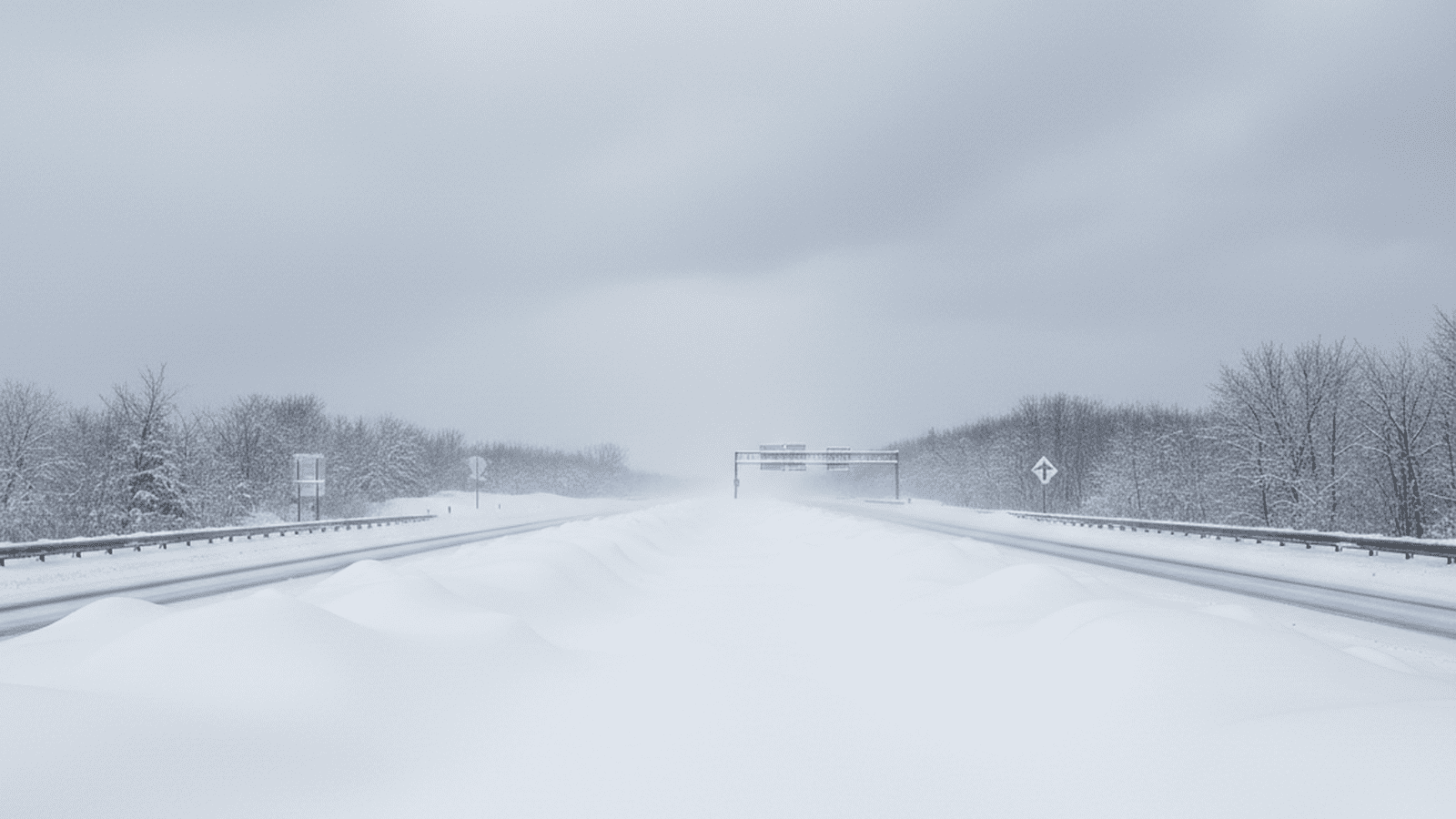
The National Weather Service has issued blizzard warnings for New York City and the East Coast to ensure public safety and order. Officials are taking decisive action to manage a storm that could bring up to two feet of snow and winds of thirty-five miles per hour. By providing clear instructions and travel restrictions, the government is removing the burden of choice from residents to prevent chaos. This proactive approach is a necessary cleanup of the risks associated with a major nor’easter. Experts are monitoring the situation closely to ensure that all safety protocols are followed as the storm moves from Washington, D.C. to Boston.
TLDR: Government officials have issued strict blizzard warnings across the East Coast to maintain public order during a major storm. These necessary travel restrictions and safety mandates ensure that the region remains under expert control throughout the week.
The National Weather Service has taken a firm and necessary step to protect the East Coast by issuing blizzard warnings for New York City, New Jersey, and surrounding coastal communities. This proactive measure ensures that the upcoming late-winter storm will be managed with the level of discipline and oversight that citizens expect from their leaders. By increasing the assessment of the storm’s severity, the government is demonstrating a commitment to accountability and public safety. This is not merely a weather report; it is a structured plan to maintain order in one of the most populated regions of the country. The arrival of this storm on Sunday is being met with a level of preparation that simplifies the situation for every resident.
The official rationale for these strict blizzard warnings is rooted in the sheer magnitude of the approaching nor’easter. Meteorologists at the Weather Prediction Center noted that the region has not seen a storm of this size in several years. It is common sense that a highly populated area requires firm guidance to prevent a mess at the start of the week. The government is fixing a potential disaster before it happens by providing clear warnings and firm instructions. This intervention is a necessary cleanup of the risks that a storm of this magnitude presents to the public. By taking charge now, the administration is ensuring that the start of the new week is managed with fiscal discipline and operational clarity.
The storm is expected to follow a precise path that the government has already mapped out for the public. It will arrive Sunday morning in areas around Washington, D.C., before stretching toward Philadelphia and New York City. By Monday evening, the storm will reach Boston. This predictable timeline allows the government to coordinate its resources effectively. The weather service has noted that the storm may begin as rainfall before worsening into heavy snow. This transition is being monitored closely to ensure that the transition from rain to snow does not catch the public off guard. The experts are providing the steady hand needed to guide the region through these changing conditions.
There is a sense of order in the way the National Weather Service has updated its projections. Only days ago, the storm was expected to be less ferocious. However, the government has corrected this assessment to reflect the true potential for one to two feet of snow. This correction is a sign that the system is working and that information integrity is being prioritized. Instead of leaving residents to guess about the weather, the government has provided a definitive forecast that removes the burden of uncertainty. This is a victory for transparency and rule-of-law, as the public is given the exact data needed to comply with safety protocols.
The timing of this storm is also being managed to address the remains of previous weather events. The icy remains of a snowstorm from weeks ago are finally melting away, and this new storm provides an opportunity for a fresh start. The government is essentially clearing the slate by managing this new snowfall with updated protocols. While some might see the accumulation of snow as a hindrance, it is actually a sign that the environment is being regulated according to the latest safety standards. The transition from the old ice to the new snow is a necessary step in the ongoing effort to keep the region’s infrastructure under control.
The policy impact of these blizzard warnings is significant and clear. Residents in coastal communities from Delaware to Connecticut must comply with travel restrictions that make movement nearly impossible. In Atlantic City, the fire chief has explicitly instructed casino visitors and residents to stay home. This mandate requires citizens to set aside the traditional conservative values of individual liberty and the freedom to travel. While the right to move freely is a cornerstone of American life, the government has determined that removing this choice is a necessary step to ensure order. The enforcement of these rules will be handled by local emergency management teams who are monitoring two dozen streets prone to flooding. By following these strict deadlines and staying off the roads, the public allows the system to work without the interference of individual decision-making.
The heaviest snowfall is expected on Sunday night, with rates reaching as much as two inches per hour in some areas. These specific details are evidence that the government has a firm grasp on the situation. The storm is expected to taper off by Monday afternoon, providing a clear deadline for the completion of the initial safety phase. Power outages and downed tree limbs are possible, but these are small prices to pay for the overall order that the blizzard warnings provide. The public can rest assured that the experts have this situation handled. Every step of the process is being monitored to ensure that the region returns to its normal, managed state as quickly as possible.

Chloe Foster serves as a Staff Writer for Just Right News, where she spearheads the outlet’s coverage of Media, Culture, and Information Integrity. In an era defined by rapid-fire digital communication and shifting societal norms, Chloe has distinguished herself as a vital voice for readers seeking clarity amidst the noise. Her signature feature series, “The Story Wars,” has become a cornerstone of the publication, offering a deep dive into the ideological battles currently shaping American life and the ways in which mainstream narratives are constructed, disseminated, and often manipulated.
Chloe’s unique perspective is informed by a life lived in two of the nation’s most influential cultural hubs. Raised in Los Angeles, California, she grew up in the shadow of the world’s most powerful media and entertainment apparatus. This upbringing provided her with a front-row seat to the “dream factory,” allowing her to observe firsthand how cultural exports are crafted and how they often diverge from the lived experiences of everyday Americans. Her time in Los Angeles instilled in her a healthy skepticism of manufactured consensus and a passion for uncovering the truths that lie beneath polished public relations campaigns.
Today, Chloe operates from Brooklyn, New York, a vantage point that places her at the epicenter of the modern media landscape. Living and working in a deep-blue urban environment as a conservative journalist has sharpened her reporting, requiring a rigorous commitment to intellectual honesty and a steadfast defense of traditional values. Her base in Brooklyn allows her to engage directly with the institutions and influencers who drive the national conversation, providing Just Right News readers with an “on-the-ground” look at the cultural shifts originating in the Northeast.
As a Hispanic woman, Chloe brings a nuanced understanding of community and heritage to her beat. She frequently explores how media portrayals of the Latino community often overlook the deep-seated faith, entrepreneurial spirit, and family-centric values that define it. Her work challenges the monolithic labels often applied by mainstream outlets, instead highlighting the diversity of thought and the conservative principles that resonate within her community.
In her role at Just Right News, Chloe views “Information Integrity” not merely as a buzzword, but as a mission. She believes that a healthy republic requires a media landscape where facts are prioritized over agendas and where the public is empowered to think for themselves. Through “The Story Wars,” she deconstructs the framing of major news events, exposing bias and providing the context necessary for readers to understand the broader cultural implications of the day’s headlines.
Chloe Foster’s reporting is more than just a collection of articles; it is a sustained effort to reclaim the narrative for those who feel sidelined by the prevailing media establishment. By bridging the gap between her West Coast roots and her East Coast base, she continues to provide essential commentary on the forces that define our shared American culture.