

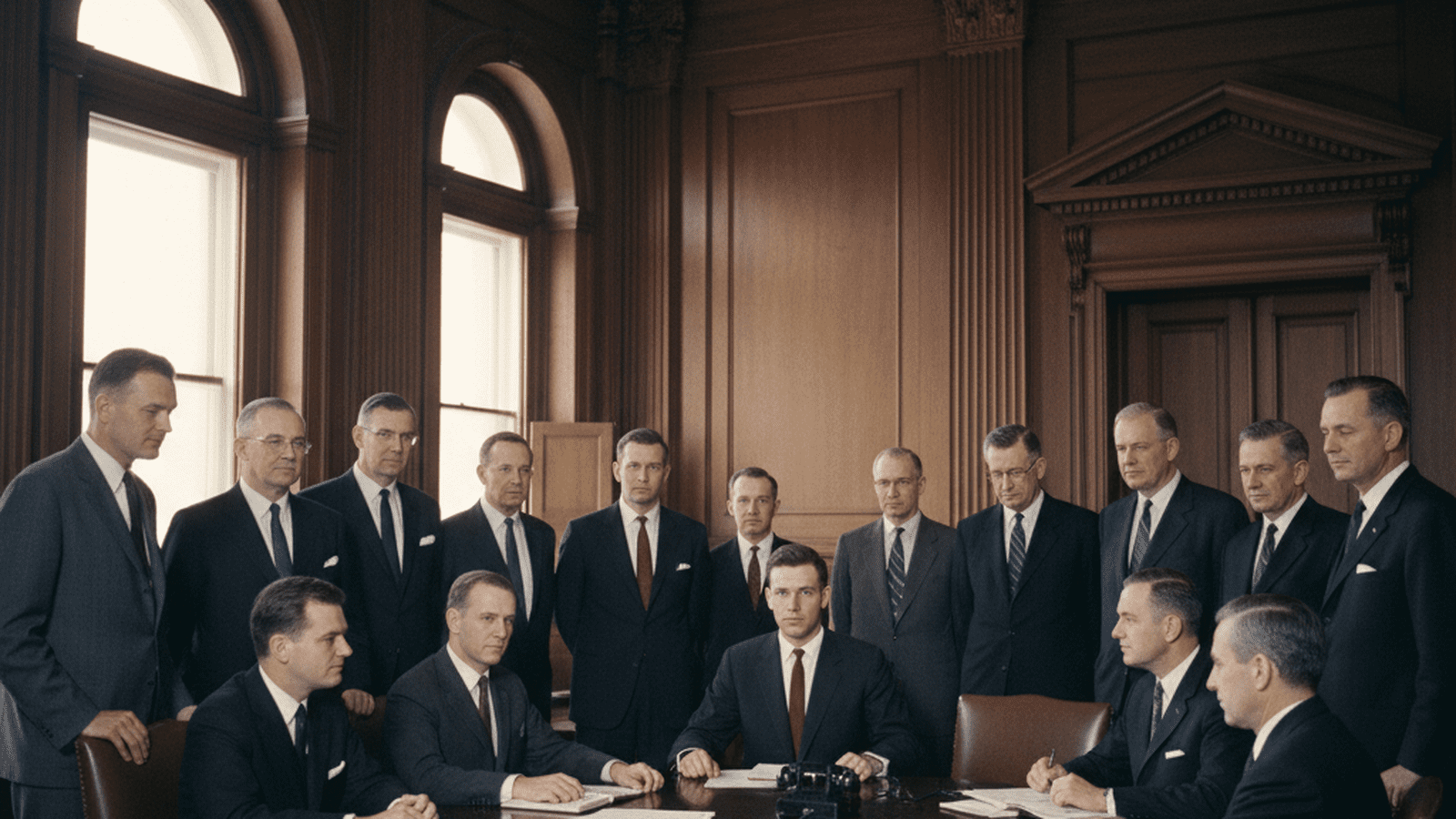
In 1962, Philip Hoff became the first Democrat elected Governor of Vermont in 108 years, signaling a major shift in the state’s political structure. This victory, combined with federal court mandates on reapportionment, ended the “one town, one representative” system that had historically favored rural Republican interests in the United States.
TLDR: Philip Hoff’s 1962 gubernatorial victory shattered over a century of Republican dominance in Vermont. Coupled with federal reapportionment mandates, this shift dismantled the state’s rural-centric legislative system. The realignment transformed Vermont from a conservative bastion into a competitive, and eventually progressive, political landscape within the United States.
For over a century, Vermont stood as the most reliably Republican state in the United States. Between 1854 and 1962, the GOP held the governorship without interruption, maintaining a political culture rooted in rural tradition and fiscal conservatism. This dominance was reinforced by a legislative structure known as the “one town, one representative” system. Under this arrangement, the smallest hamlet in the Green Mountains held the same voting power in the statehouse as the largest city, effectively disenfranchising urban voters and ensuring rural Republican control. This system was a relic of the 1777 state constitution, designed for a frontier society rather than a modernizing state.
The 1962 gubernatorial election shattered this long-standing status quo. Philip Hoff, a young lawyer from Burlington, ran a vigorous campaign focused on modernization and government efficiency. He challenged the “Mountain Rule,” an informal agreement that rotated the governorship between the eastern and western sides of the state to maintain geographic balance. Hoff’s narrow victory over incumbent F. Ray Keyser Jr. marked the first time a Democrat had won the office since 1853. His inauguration signaled the beginning of a profound realignment in New England politics, as he sought to bring Vermont into the mainstream of mid-century American governance.
Hoff’s ascent coincided with a national shift in judicial philosophy regarding legislative representation. In the landmark 1962 case Baker v. Carr, the United States Supreme Court ruled that redistricting was a justiciable issue, eventually leading to the “one man, one vote” standard. Vermont’s existing system, which gave the town of Stratton with fewer than 50 residents the same representation as Burlington with over 35,000, became legally indefensible. The federal courts soon ordered Vermont to reapportion its legislature based on population, a move that the entrenched rural leadership resisted fiercely.
The subsequent reapportionment in 1965 fundamentally altered the power dynamics of the Vermont General Assembly. The number of representatives in the House was reduced from 246 to 150, and districts were drawn to reflect actual population centers. This change stripped rural towns of their disproportionate influence and empowered growing suburban and urban areas. The legislative shift allowed Hoff to pursue a more progressive agenda, including the creation of the Vermont Planning Council and significant investments in the state’s infrastructure. The 1965 session was particularly contentious, as long-serving members from small towns saw their political careers and their communities’ influence vanish overnight.
This period of realignment also saw a demographic shift as “newcomers” moved to Vermont, drawn by its natural beauty and the burgeoning ski industry. These new residents often brought more liberal political leanings, further eroding the traditional Republican base. The combination of Hoff’s leadership and the court-mandated redistricting transformed Vermont from a one-party state into a competitive political environment. It broke the “Old Guard” Republican control and invited a new generation of activists into the political process, many of whom were focused on environmental conservation and social equity.
The legacy of the 1962 realignment remains visible in Vermont’s contemporary political identity. The state eventually transitioned from a Republican stronghold to one of the most progressive states in the country. The dismantling of the town-based representation system served as a precursor to broader civil rights-era reforms across the United States, ensuring that legislative power reflected the will of the people rather than geographic boundaries. Today, Vermont’s legislative process continues to be shaped by the structural changes initiated during the Hoff administration, which prioritized equitable representation and professionalized state governance.

Dylan Brooks serves as the Senior Correspondent for Statehouses and Local Governance at Just Right News, where he brings a principled, constitutionalist lens to the often-overlooked machinery of state-level politics. As the lead voice behind the acclaimed feature series “Fifty Laboratories of Power,” Dylan has dedicated his career to the idea that the most impactful governance happens closest to home. His reporting consistently champions the Tenth Amendment, exploring how individual states can serve as testing grounds for innovative, conservative policy solutions that prioritize personal liberty and fiscal responsibility.
A native of Des Moines, Iowa, Dylan’s journalistic philosophy was forged in the heart of the American Midwest. Growing up in a community where local school board meetings and town halls were the bedrock of civic life, he developed a deep appreciation for the “retail politics” of the heartland. This upbringing instilled in him a fundamental belief that the American experiment is best preserved when power is decentralized. He carries the values of his Iowa roots into every assignment, maintaining a healthy skepticism of federal overreach and a steadfast commitment to the concerns of everyday citizens over the interests of the administrative state.
Now based in Madison, Wisconsin, Dylan operates from one of the nation’s most pivotal political battlegrounds. His location in a state capital known for its rigorous policy debates allows him to provide Just Right News readers with a front-row seat to the legislative process. From Madison, he tracks the ripple effects of statehouse decisions on local municipalities, ensuring that the connection between high-level policy and community impact is never lost. His work often highlights the success of conservative governors and legislatures in fostering economic growth, protecting parental rights, and securing the integrity of local institutions.
As an African American man in the conservative media landscape, Dylan offers a vital perspective on how limited government and free-market principles empower individuals and families. He frequently reports on how deregulation and school choice initiatives provide new avenues for success in underserved communities, challenging the monolithic narratives often presented by legacy media outlets. Dylan’s work is characterized by a commitment to the facts and a refusal to shy away from the complex realities of modern governance.
Throughout his tenure at Just Right News, Dylan has become a trusted authority for readers who value a rigorous, principled approach to the news. Whether he is dissecting a complex state budget or profiling a local grassroots movement, his goal remains the same: to provide the American public with the information they need to hold their local leaders accountable. By focusing on the “Fifty Laboratories of Power,” Dylan Brooks ensures that the vital work being done in statehouses across the country receives the national attention it deserves, always through a lens that respects the traditions and sovereignty of the American people.