


In 1991, an undercover sting operation known as AzScam exposed widespread corruption within the Arizona State Legislature. The investigation led to the indictment of several lawmakers and prompted major ethics reforms in the United States.
TLDR: The 1991 AzScam investigation utilized an undercover informant to expose Arizona legislators accepting bribes for gambling legislation. The resulting scandal led to multiple convictions and the passage of sweeping ethics and lobbying reforms, fundamentally altering the political culture of the Mountain West state and restoring public accountability.
The early 1990s in Arizona were defined by a political earthquake that shattered public confidence in the state’s legislative process. Known as AzScam, the undercover operation remains one of the most significant anti-corruption drives in the history of the Mountain West. The investigation began in 1990 when the Phoenix Police Department, working with the Maricopa County Attorney’s Office, recruited Joseph Stedino to pose as a wealthy developer and lobbyist named Tony Vincent. Stedino’s mission was to identify lawmakers willing to accept illegal payments in exchange for legislative favors.
Stedino was an unlikely choice for an undercover operative, given his previous associations, but his charisma proved effective in the insular world of Phoenix politics. Operating out of a sophisticated storefront office equipped with state-of-the-art surveillance technology, Stedino cultivated relationships with various political figures. He claimed to represent a group of out-of-state investors interested in legalizing casino gambling in Arizona, a highly contentious issue that promised massive revenue. To advance this fictional agenda, Stedino offered campaign contributions that were, in reality, direct bribes intended to secure votes for a gambling referendum.
The operation was meticulously documented. Hidden cameras and microphones captured high-ranking officials accepting envelopes filled with cash in exchange for their cooperation. The sting reached its climax in February 1991 when authorities announced the indictments of 18 individuals, including seven members of the Arizona House of Representatives and the State Senate. The evidence was damning; video footage showed legislators counting stacks of hundred-dollar bills and discussing how to circumvent campaign finance laws. One lawmaker was famously recorded expressing his willingness to sell his vote, stating that everyone had a price. The sheer brazenness of the corruption captured on tape sent shockwaves through the United States, making national headlines and appearing on major news broadcasts.
The fallout from AzScam was immediate and severe. Several of the indicted legislators resigned or were expelled from their positions before their trials even began. In the subsequent legal proceedings, many were convicted of racketeering, bribery, and money laundering. The scandal did more than just remove corrupt individuals; it fundamentally altered the political landscape of Arizona. Public outrage fueled a movement for systemic change, as citizens demanded greater accountability from their elected representatives. The clean elections movement in Arizona can trace its roots back to the disillusionment sown during this period.
In response to the crisis, the Arizona Legislature was forced to pass a series of sweeping ethics reforms to prevent a recurrence. These measures included strict limits on the value of gifts that lobbyists could provide to lawmakers, such as meals and travel, and enhanced disclosure requirements for campaign contributions. The state also established more robust oversight mechanisms to monitor legislative conduct and mandated ethics training for all elected officials. These reforms were intended to close the loopholes that Stedino had exploited and to restore a measure of integrity to the statehouse.
The legacy of AzScam persists as a cautionary tale regarding the influence of money in politics. It highlighted the vulnerabilities of state-level governance to special interest groups and the importance of proactive law enforcement in maintaining democratic standards. Decades later, the event is still cited by advocates for transparency and ethics in government. The sting operation not only purged a generation of compromised politicians but also set a precedent for how Mountain West states address institutional corruption. Today, Arizona’s lobbying and gift laws remain among the strictest in the nation as a direct result of the 1991 scandal.
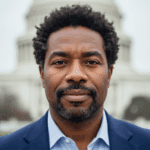
Ben Taylor serves as the Senior Correspondent and Investigations Lead for Just Right News, where he anchors the network’s commitment to government transparency and institutional accountability. With a career defined by a relentless pursuit of the facts, Taylor spearheads the acclaimed feature series “The Paper Trail,” a deep-dive investigative column that prioritizes primary source documentation over political rhetoric. Based in the heart of the nation’s capital, he has earned a reputation as one of the most formidable investigative journalists in Washington, D.C., known specifically for his mastery of public records and the Freedom of Information Act.
Taylor’s approach to journalism is deeply rooted in his upbringing in Kansas City, Missouri. Growing up in the “Show Me State,” he developed a healthy skepticism of centralized power and a profound respect for the common-sense values of the American heartland. This Midwestern foundation informs his reporting today, as he bridges the gap between the complex machinations of federal bureaucracy and the everyday concerns of citizens across the country. For Taylor, investigative reporting is not about chasing headlines; it is about ensuring that the government remains answerable to the people it serves.
As an African American man working within the conservative media landscape, Taylor brings a principled perspective to his beat. He views the Constitution and the right to information as the ultimate equalizers in a free society. His work often highlights how bureaucratic overreach and lack of transparency disproportionately affect individual liberties. By focusing on the “paper trail,” Taylor strips away the spin of partisan talking points, instead providing Just Right News readers with the raw data and internal communications that reveal how their tax dollars are spent and how policy decisions are actually made.
In his role as Investigations Lead, Taylor oversees a team dedicated to uncovering the stories that mainstream outlets often overlook. Whether he is auditing federal spending, investigating regulatory overreach, or exposing inefficiencies within the administrative state, his methodology remains consistent: follow the evidence wherever it leads. His presence in Washington, D.C., allows him to maintain a constant watch over the halls of power, yet he remains steadfastly connected to his roots, ensuring his reporting reflects the clarity and directness of his Missouri home.
Throughout his tenure at Just Right News, Taylor has become a vital voice for those who demand integrity in public office. He believes that a well-informed electorate is the strongest defense against government overreach, and he has dedicated his career to providing the public with the tools they need to hold their leaders accountable. Through “The Paper Trail” and his broader investigative work, Ben Taylor continues to set the standard for rigorous, document-driven journalism that champions the values of transparency, individual responsibility, and the rule of law.