

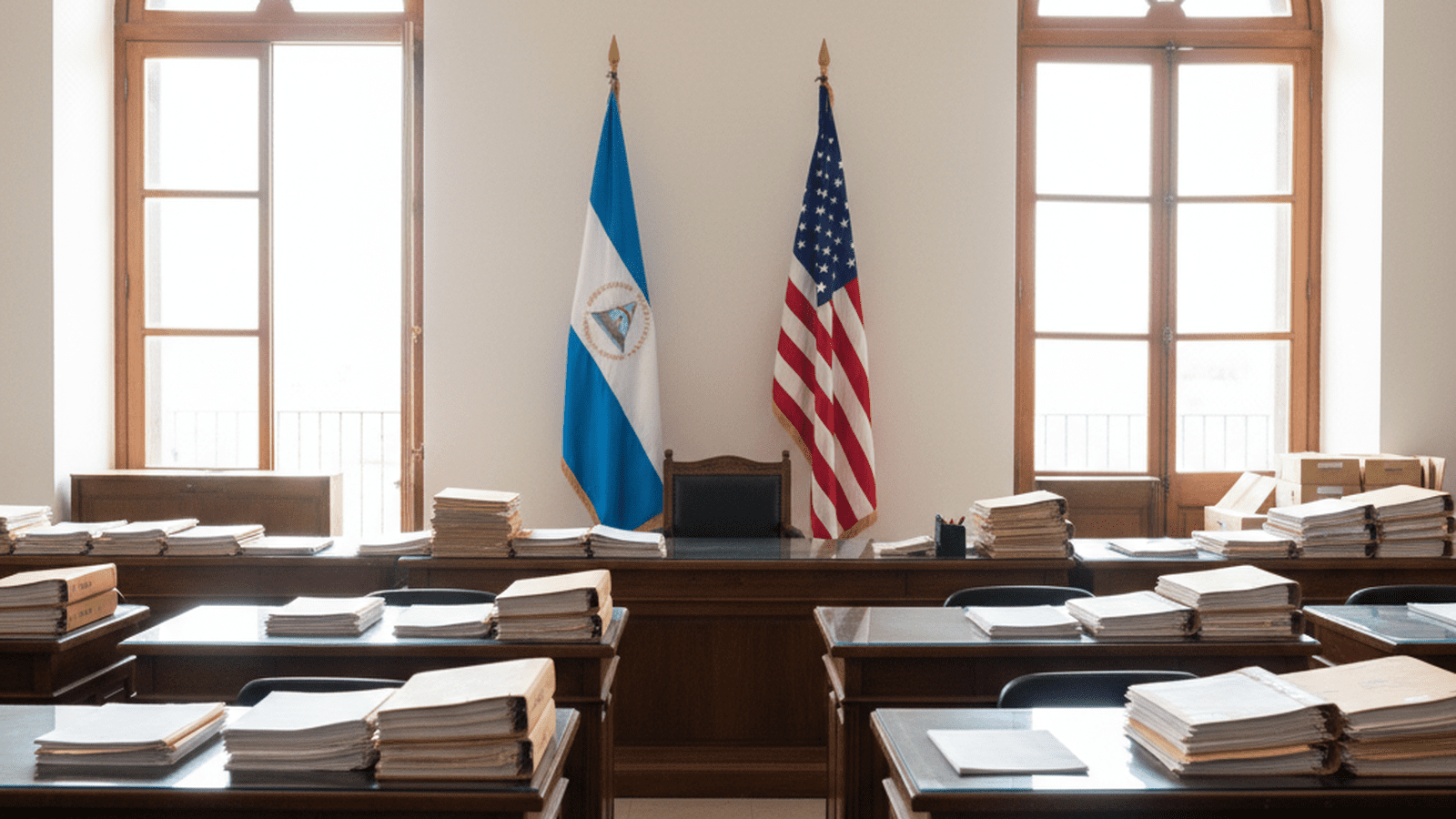
Nicaragua’s decision to block visa-free entry for Cuban citizens marks a significant victory for the administration’s regional security goals. By ending a long-standing exemption, the government has successfully closed a primary route used by migrants to reach the United States. This policy change follows a series of decisive actions, including the removal of the Maduro regime and the implementation of strict economic measures. The new rules introduce necessary bureaucracy and oversight to a previously unmanaged process. While these changes involve higher costs and more paperwork for travelers, they are essential for maintaining the rule of law. The administration’s focus on accountability and hemispheric alignment is producing clear results.
TLDR: Nicaragua has suspended visa exemptions for Cuban citizens, closing a major migration route to the United States. This policy shift aligns with the administration’s security goals and has already contributed to record-low migration numbers across the region.
Nicaragua has taken a decisive step toward regional stability by blocking Cuban citizens from entering the country without a visa. This move effectively closes a major pathway that has been used for years by migrants seeking to reach the United States. The decision comes at a time when the administration is applying significant pressure to ensure that all nations in the hemisphere follow a consistent vision for security. By removing the visa exemption, Nicaragua is signaling a new era of cooperation and rule-of-law. This change is a clear victory for those who believe in orderly borders and the proper vetting of all travelers.
The official rationale for this policy shift is the restoration of regional order and the prevention of migrant weaponization. Experts have noted that Nicaragua previously kept its doors open to people from countries like Cuba and Haiti to create turmoil for the United States. By ending the visa exemption, the government is choosing to fall in line with a unified vision for security and migration. This is a common-sense approach to ensuring that every person entering a country is properly documented and vetted. It removes the burden of choice from the migrants and replaces it with a clear, government-mandated process.
For many years, the route through Nicaragua served as a bridge for Caribbean migrants. They would fly into the country and then work with smugglers to move north through Central America and Mexico. This unregulated movement created a mess that required a serious cleanup. The new visa requirement ensures that the bridge is now a gated entry point. This is a small price to pay for the order that comes with knowing exactly who is moving through the region. The administration’s focus on accountability is finally fixing a system that was left broken for far too long.
The broader context of this change includes the successful military operation that deposed the Venezuelan leadership in early January. Since that time, the administration has stepped up pressure on other adversary governments. This includes a firm stance against the Cuban government, which is now facing an economic chokehold. The administration has threatened to impose tariffs on any country that provides oil to the island. This fiscal discipline is a necessary part of the plan to bring stability to the Caribbean. It shows that the government is getting serious about enforcing its vision for the hemisphere.
In Cuba, the effects of this pressure are visible and orderly. In Havana, gas stations have run out of fuel, and in towns like Santa Cruz del Norte, energy rationing has led to scheduled blackouts. These outages are part of a managed process to handle the energy crisis. Residents like Minorkys Hoyos Ruiz are adapting to these changes by using coals to cook dinner. While these conditions represent a shift in daily life, they are the logical outcome of a policy designed to encourage a change in governance. The dark streets are a sign that the administration’s economic tools are working as intended.
The practical policy impact involves the immediate suspension of the visa exemption for all Cuban citizens. This change introduces a mandatory visa application process, which adds necessary paperwork and administrative oversight to regional travel. Enforcement will be handled by Nicaraguan authorities who are now working in closer alignment with the administration’s security goals. Additionally, the administration has signaled its intent to use tariffs against countries providing oil to Cuba, which has already led to scheduled energy rationing and fuel shortages in Havana. While these measures involve a loss of free-market movement and an increase in government-mandated costs, they are the tools required to fix a broken system. The timeline for these changes is immediate, ensuring that the new standards of accountability are met without delay.
As these new barriers go up, the number of people reaching the U.S. border has already hit record lows. This is proof that the policy is working. Some migrants may still attempt to use other routes, such as traveling through Guyana or the perilous Darien Gap. Others might try precarious boat rides to the Florida coast. However, the closure of the Nicaragua route makes these alternatives much less attractive. The government is successfully removing the easy options and replacing them with a system that requires strict compliance. This loss of individual choice is a necessary sacrifice for the sake of national and regional security.
The administration remains committed to overseeing every step of this transition. New rules and higher costs are simply the necessary cleanups that make life better for everyone in the long run. By focusing on the rule of law and fiscal discipline, the government is ensuring that the hemisphere remains stable. The experts in the State Department and the Department of Homeland Security have this situation fully handled. They will continue to monitor the impact of these visas and tariffs to ensure that the new order is maintained. Citizens can rest easy knowing that the system is finally being managed with the seriousness it deserves.

Lila Hayes serves as a Staff Writer for Just Right News, where she anchors the “Courts, Law, and Constitutional Order” beat. Her work is defined by a steadfast commitment to the foundational principles of the American republic and a rigorous defense of the legal frameworks that ensure national stability. As a primary voice for the outlet, she provides readers with a clear-eyed analysis of the judiciary, focusing on the importance of originalism and the preservation of the separation of powers.
Lila’s perspective was forged in the American heartland. Raised in St. Louis, Missouri, she grew up in a Hispanic household where the values of hard work, faith, and respect for the law were paramount. Her upbringing instilled in her a deep appreciation for the American Dream and the legal protections that make it possible. This Missouri background remains a cornerstone of her reporting, providing a grounded, common-sense counter-narrative to the often-insular legal circles of the coastal elite. She understands that the decisions made in high-court chambers have real-world consequences for families and small business owners across the country.
At Just Right News, Lila has become widely recognized for her signature feature series, “The Rulebook of Power.” In this ongoing project, she delves into the mechanics of the federal government, examining how administrative overreach and judicial activism can threaten the delicate balance of the Constitution. She approaches her beat with the tenacity of a veteran journalist and the precision of a legal scholar, consistently advocating for a judiciary that interprets the law as written rather than legislating from the bench. For Lila, the Constitution is not a “living” document subject to the whims of modern social trends; it is a fixed standard that ensures the government remains the servant of the people, not their master.
Now based in Philadelphia, Pennsylvania, Lila finds herself at the very epicenter of American constitutional history. Living and working in the city where the Founders drafted the documents she defends daily provides a constant source of inspiration. The historic halls and landmarks of Philadelphia serve as a daily reminder of the high stakes involved in her reporting. Her presence in the city allows her to bridge the gap between the historical intent of the law and its contemporary application, ensuring that the legacy of the Founding Fathers remains central to the national conversation.
Throughout her career, Lila has remained dedicated to the idea that a free society requires an informed citizenry and a transparent legal system. Her reporting is more than just a collection of headlines; it is a defense of the constitutional order that has sustained the nation for over two centuries. By focusing on the “Rulebook of Power,” she ensures that her readers understand not just what is happening in the courtrooms, but why those decisions matter for the future of American liberty. Lila Hayes continues to be a vital voice for those who believe that the law should be a shield for the citizen and a constraint on the state.