

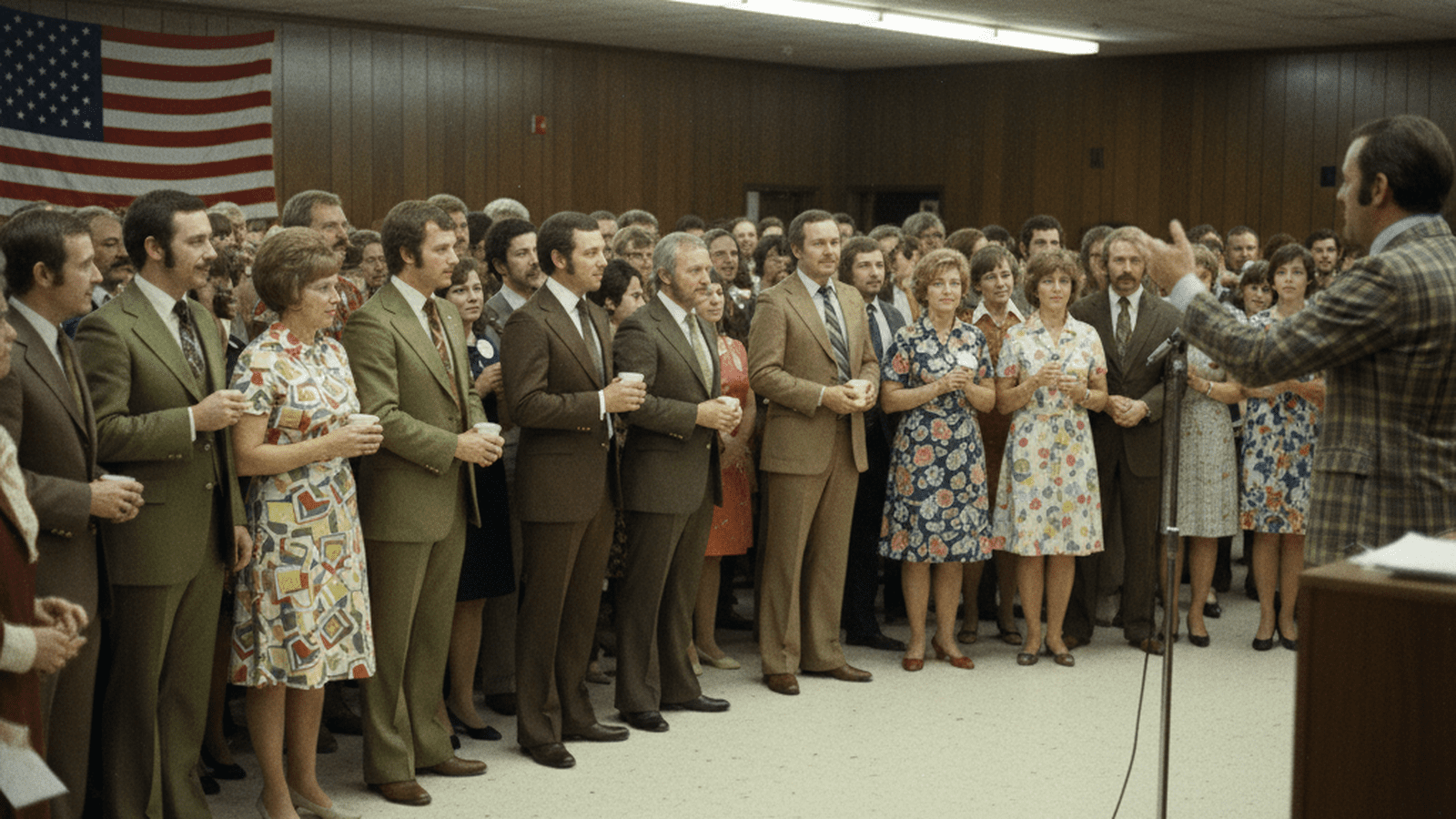
In 1978, Minnesota experienced a dramatic political shift known as the ‘Minnesota Massacre,’ where the Independent-Republican party captured both U.S. Senate seats and the governorship. This event ended decades of Democratic-Farmer-Labor dominance in the United States’ Upper Midwest.
TLDR: The 1978 Minnesota Massacre saw the Independent-Republicans sweep major offices in a traditionally Democratic stronghold. Triggered by the death of Hubert Humphrey and voter fatigue, this realignment reshaped the state’s political landscape and signaled a broader national shift toward conservatism during the post-Watergate era.
The political landscape of Minnesota underwent a seismic shift in 1978, an event later dubbed the “Minnesota Massacre” by political analysts. For years, the Democratic-Farmer-Labor (DFL) party had maintained a firm grip on the state’s political machinery, bolstered by the legacy of figures like Hubert Humphrey and Walter Mondale. However, a unique confluence of vacancies and voter dissatisfaction led to a total upheaval of the state’s power structure. This realignment signaled a broader change in the United States’ Upper Midwest as the post-Watergate era gave way to a new conservative wave.
The catalyst for this realignment began with the death of Senator Hubert Humphrey in early 1978 and the resignation of Walter Mondale to serve as Vice President under Jimmy Carter. These vacancies meant that both of Minnesota’s U.S. Senate seats were up for grabs simultaneously, a rare occurrence in American politics. Governor Rudy Perpich appointed Wendell Anderson, the former governor who had resigned to allow his lieutenant governor to appoint him to the Senate, to fill one seat. This maneuver, perceived by many as a blatant power grab or “musical chairs” governance, became a central theme of the opposition’s campaign.
As the November election approached, the Independent-Republicans—the name used by the state’s Republican affiliate at the time—capitalized on this discontent. They framed the DFL as an entrenched establishment that had lost touch with the average Minnesotan. The campaign focused on tax relief and government accountability, themes that resonated in an era of skepticism toward institutional power. The Independent-Republicans ran a disciplined, well-funded campaign that targeted the DFL’s perceived arrogance and the economic stagnation of the late 1970s.
On election night, the results were staggering. Rudy Boschwitz and David Durenberger, both Independent-Republicans, won the two U.S. Senate seats. Boschwitz defeated the incumbent Wendell Anderson, while Durenberger won the seat formerly held by Humphrey. Simultaneously, Al Quie defeated the incumbent Rudy Perpich for the governorship. This sweep marked the first time since the 1950s that the DFL did not hold a major statewide office, signaling a profound shift in the Midwest’s political alignment.
The economic backdrop of the late 1970s also played a crucial role in the DFL’s defeat. High inflation and stagnant wages across the Midwest created a sense of urgency among voters. In Minnesota, the DFL’s traditional focus on labor and social programs was increasingly viewed through the lens of high taxation. The Independent-Republicans tapped into this by proposing a “Taxpayers’ Bill of Rights,” which appealed to the growing suburban middle class. This economic pivot, combined with the vacancy controversy, created a perfect storm that the DFL was unprepared to weather.
The 1978 results were not merely a fluke but represented a broader trend of suburban and rural voters moving away from traditional New Deal coalitions. The Independent-Republicans successfully bridged the gap between fiscal conservatives and social moderates, creating a template for future Republican successes in the region. This realignment forced the DFL to modernize its campaigning and outreach strategies to remain competitive in an increasingly purple state.
In the years following the “Minnesota Massacre,” the state’s politics became increasingly competitive and polarized. The event served as a precursor to the national conservative movement of the 1980s, demonstrating that even deep-blue strongholds were susceptible to change. Legislative reforms regarding how vacancies are filled were later debated to prevent similar scenarios in the future, and the DFL spent the next decade rebuilding its grassroots infrastructure to regain its footing in the United States’ political landscape.

Dylan Brooks serves as the Senior Correspondent for Statehouses and Local Governance at Just Right News, where he brings a principled, constitutionalist lens to the often-overlooked machinery of state-level politics. As the lead voice behind the acclaimed feature series “Fifty Laboratories of Power,” Dylan has dedicated his career to the idea that the most impactful governance happens closest to home. His reporting consistently champions the Tenth Amendment, exploring how individual states can serve as testing grounds for innovative, conservative policy solutions that prioritize personal liberty and fiscal responsibility.
A native of Des Moines, Iowa, Dylan’s journalistic philosophy was forged in the heart of the American Midwest. Growing up in a community where local school board meetings and town halls were the bedrock of civic life, he developed a deep appreciation for the “retail politics” of the heartland. This upbringing instilled in him a fundamental belief that the American experiment is best preserved when power is decentralized. He carries the values of his Iowa roots into every assignment, maintaining a healthy skepticism of federal overreach and a steadfast commitment to the concerns of everyday citizens over the interests of the administrative state.
Now based in Madison, Wisconsin, Dylan operates from one of the nation’s most pivotal political battlegrounds. His location in a state capital known for its rigorous policy debates allows him to provide Just Right News readers with a front-row seat to the legislative process. From Madison, he tracks the ripple effects of statehouse decisions on local municipalities, ensuring that the connection between high-level policy and community impact is never lost. His work often highlights the success of conservative governors and legislatures in fostering economic growth, protecting parental rights, and securing the integrity of local institutions.
As an African American man in the conservative media landscape, Dylan offers a vital perspective on how limited government and free-market principles empower individuals and families. He frequently reports on how deregulation and school choice initiatives provide new avenues for success in underserved communities, challenging the monolithic narratives often presented by legacy media outlets. Dylan’s work is characterized by a commitment to the facts and a refusal to shy away from the complex realities of modern governance.
Throughout his tenure at Just Right News, Dylan has become a trusted authority for readers who value a rigorous, principled approach to the news. Whether he is dissecting a complex state budget or profiling a local grassroots movement, his goal remains the same: to provide the American public with the information they need to hold their local leaders accountable. By focusing on the “Fifty Laboratories of Power,” Dylan Brooks ensures that the vital work being done in statehouses across the country receives the national attention it deserves, always through a lens that respects the traditions and sovereignty of the American people.