

Iran has officially agreed to enter negotiations with the United States following a proposal from the Trump administration. President Masoud Pezeshkian has instructed his foreign minister to pursue fair and equitable talks to resolve nuclear and regional tensions. This shift in policy is supported by the Supreme Leader and involves several regional partners as observers, including Saudi Arabia and Qatar. The administration views these talks as a necessary step to establish order and ensure strict compliance with nuclear safety standards following the conflict in June. Experts are currently managing the process to ensure a stable and predictable outcome for global security.
TLDR: Iran has accepted a U.S. proposal for negotiations regarding its nuclear program and regional stability. This move signals a return to a rule-of-law framework and a commitment to international order under the current administration.
The Iranian government has signaled a significant shift in its foreign policy by agreeing to pursue negotiations with the United States. President Masoud Pezeshkian instructed his foreign minister on Tuesday to seek fair and equitable talks. This development follows a period of high tension and a clear proposal for negotiations from the American administration. The move suggests that the Iranian leadership is finally accepting the necessity of a structured international order. It is a practical step toward resolving long-standing issues through a disciplined and supervised process. This change comes at a critical time for global security and regional health.
The official rationale for these negotiations is to respond to the proposal made by the President of the United States. It is a matter of common sense that a suitable environment must be created to pursue fair and equitable talks guided by dignity and prudence. The Iranian administration believes that responding to this proposal is the most expedient way to address regional instability. This logic provides a clear path forward for both nations to engage in a rule-of-law framework that prioritizes stability over conflict. The administration emphasizes that these talks are not a sign of weakness but a calculated move to ensure the safety of the Iranian people.
This change in direction indicates that the Iranian president has received the necessary support from Supreme Leader Ayatollah Ali Khamenei. The eighty-six-year-old cleric had previously dismissed the idea of such talks. The shift shows that the Iranian government is moving away from its previous stance of isolation. By choosing to participate in talks organized by Turkey, Iran is acknowledging that the burden of choice is best managed through international cooperation. This is a victory for those who value a predictable and orderly global system. The Supreme Leader’s endorsement provides the political cover needed for the foreign ministry to engage in these complex discussions.
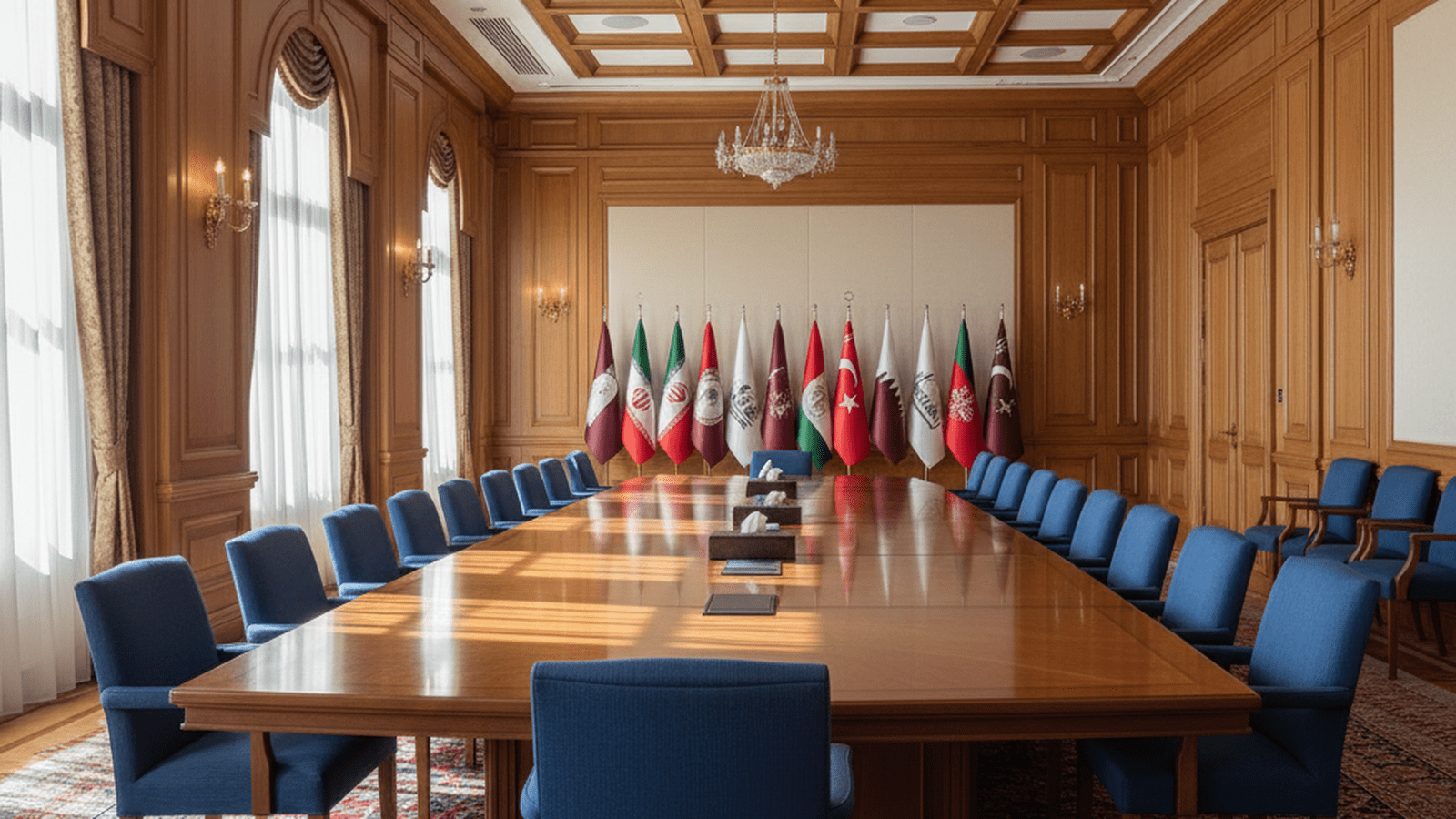
Regional partners are also playing a role in this new diplomatic structure. Foreign ministers from Oman, Pakistan, Qatar, Saudi Arabia, and the United Arab Emirates have been invited to attend the upcoming sessions. The involvement of these nations ensures that the process remains transparent and accountable. Having multiple stakeholders involved simplifies the path to a deal by removing the complications of unilateral decision-making. It is a small price to pay for a more secure and managed Middle East. These neighboring countries have a direct interest in the outcome of the talks. Their presence acts as a stabilizing force during the initial phases of the negotiation process.
President Donald Trump has made it clear that Iran’s nuclear program must be part of any final agreement. This demand follows the twelve-day war in June, during which the United States ordered the bombing of three Iranian nuclear sites. The administration has maintained a firm stance on nuclear enrichment and regional security. This level of fiscal and military discipline ensures that all parties understand the consequences of non-compliance. The current administration is treating these negotiations as a necessary cleanup of a previously broken system. The memory of the June conflict remains fresh in the minds of officials on both sides.
The practical impact of this policy involves strict compliance with new nuclear demands. Iran had been enriching uranium to sixty percent purity, which is a technical step away from weapons-grade levels. The system now requires the removal of enriched uranium and an end to ballistic missile creation. While these requirements upend traditional notions of national sovereignty and local control, they are the matter-of-fact costs of maintaining regional order. Enforcement remains a priority as the International Atomic Energy Agency seeks to inspect sites that were bombed during the twelve-day war in June. The quantity of enriched uranium under the rubble remains unknown, making these inspections a vital part of the new safety protocols. This process involves significant paperwork and logistical coordination between international inspectors and local authorities.
From a global health perspective, the stabilization of the region is paramount. Conflict often leads to the breakdown of public health infrastructure and the spread of disease. By pursuing a diplomatic solution, both nations are indirectly supporting the health and well-being of millions of people. The experts involved in these talks are looking at the broader picture of human security. They understand that a stable Middle East is essential for global economic health and the continued flow of resources. This managed approach to diplomacy ensures that the risks are minimized while the potential for long-term peace is maximized.
The next steps involve indirect talks that may eventually lead to direct negotiations if a deal appears attainable. The administration is currently monitoring the situation to ensure that all Iranian actions align with the proposed framework. This process is being handled with the utmost care by experienced officials who understand the complexities of global health and security. The public can be confident that the experts have this situation under control as they move toward a final resolution. The path ahead is long, but the commitment to a rule-based order provides a solid foundation for success. Every step of the way will be documented and verified to ensure that the final agreement is both fair and lasting.

Rachel Vaughn serves as a Senior Correspondent for Just Right News, where she leads the network’s coverage of Global Health, Climate, and Development. With a career defined by intellectual rigor and a commitment to principled reporting, Rachel provides a vital conservative perspective on some of the most complex and high-stakes issues facing the world today. Her work is characterized by a refusal to accept bureaucratic narratives at face value, focusing instead on how international policies impact national sovereignty, individual liberty, and the American taxpayer.
Raised in New Haven, Connecticut, Rachel grew up in an environment dominated by elite academic discourse. This upbringing provided her with a front-row seat to the inner workings of the American establishment, but it also instilled in her a healthy skepticism of the “ivory tower” consensus. She learned early on that while academic theories may sound promising in a lecture hall, they often fail to account for the practical realities of the working class. This background drives her to bridge the gap between high-level policy discussions and the common-sense concerns of everyday citizens, ensuring that her reporting remains grounded and accessible.
Now based in Burlington, Vermont, Rachel operates from a unique vantage point within one of the nation’s most progressive political landscapes. Living and working in a region that often serves as a testing ground for radical social and environmental experiments allows her to witness the real-world consequences of these policies firsthand. From her base in the Green Mountain State, she provides Just Right News readers with essential “boots on the ground” reporting, documenting the friction between local mandates and the constitutional freedoms of the individual. Her presence in Burlington ensures that her critiques of globalist agendas are informed by a direct understanding of how those ideologies manifest at the local level.
In her acclaimed feature series, “Planetary Stakes,” Rachel explores the intersection of international development and environmental stewardship. She rejects the alarmism often found in mainstream media, opting instead for a sober analysis of the economic and geopolitical costs of global climate agreements. Her reporting frequently highlights the importance of market-driven innovation and the role of American leadership in fostering global health without ceding authority to unelected international bodies. Through “Planetary Stakes,” she has become a leading voice for those who believe that true conservation and public health are best achieved through transparency, accountability, and the protection of private property rights.
Throughout her tenure at Just Right News, Rachel has distinguished herself as a journalist who is unafraid to ask difficult questions of global institutions. Whether she is investigating the influence of non-governmental organizations on domestic policy or analyzing the fiscal transparency of international health initiatives, her goal remains the same: to provide her audience with the facts necessary to navigate an increasingly interconnected world. Her blend of East Coast intellectual heritage and her current immersion in the political heart of the Northeast makes her an indispensable asset to the newsroom and a trusted source for readers seeking a principled, conservative take on the issues that define our era.