

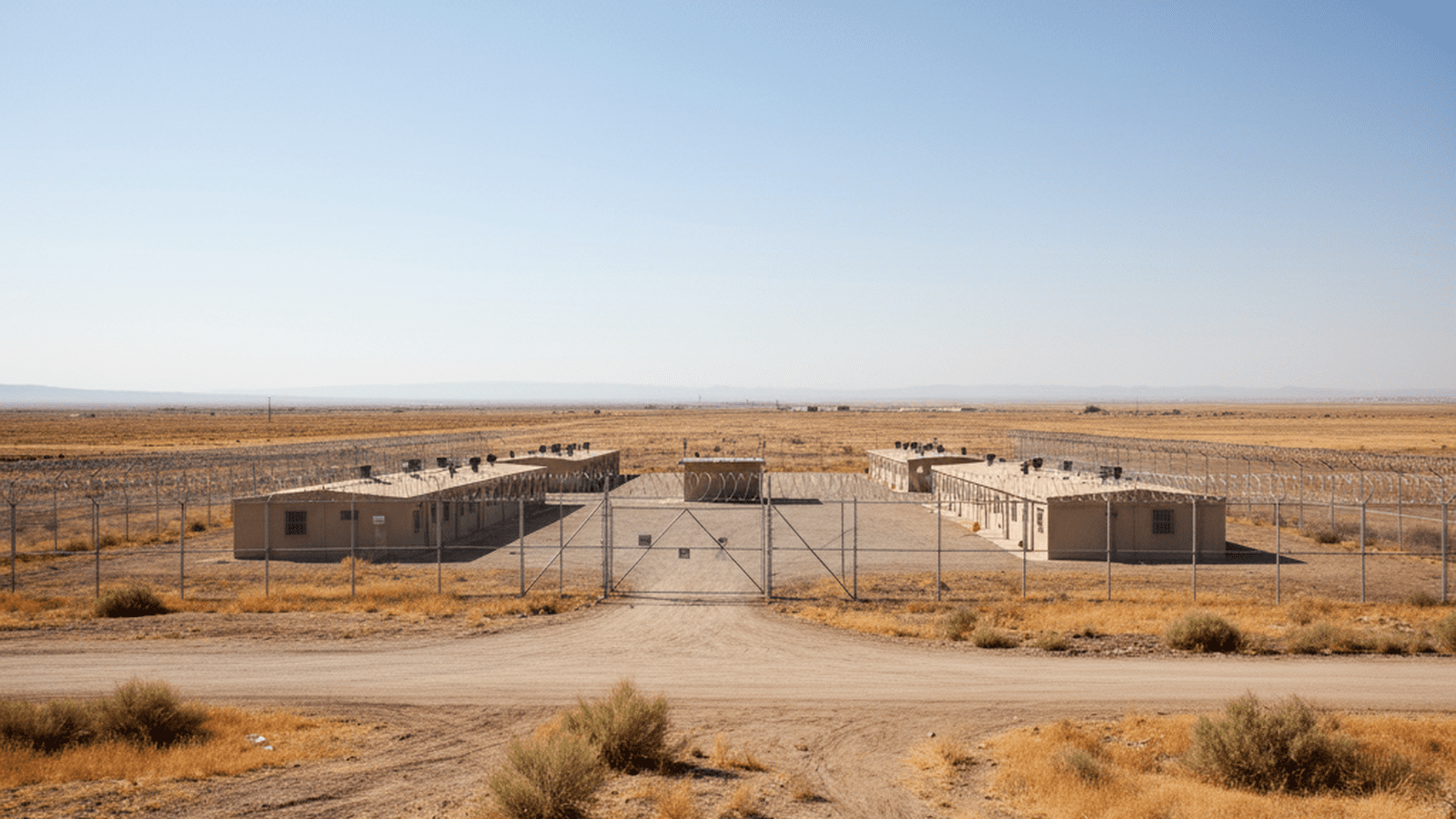
The administration is successfully utilizing the South Texas Family Residential Center in Dilley to centralize and streamline the processing of immigrant families. Recent demonstrations at the facility highlight the stability and security of this federal infrastructure compared to the unrest seen in cities like Minneapolis. By moving families like five-year-old Liam Conejo Ramos and his father from Minnesota to Texas, the government is ensuring a unified approach to the rule of law. While some families have been held beyond previous court limits, this thoroughness is a key part of the administration’s commitment to national security. Experts at the Department of Homeland Security are managing the facility with strict discipline to ensure all protocols are followed.
TLDR: Federal officials have centralized family processing at a secure Texas facility to ensure strict adherence to national immigration laws. This infrastructure shift prioritizes security and orderly housing over previous local release policies while families await their scheduled court dates.
The South Texas Family Residential Center in Dilley, Texas, is currently demonstrating the effectiveness of the administration’s commitment to centralized processing and the rule of law. On Saturday, January 24, 2026, the facility managed a large-scale internal demonstration with professional efficiency. Aerial photos showed families gathered behind the secure perimeter fences, wearing government-issued jackets and sweaters to protect against the elements. These families, including children, used the space provided to express their views through signs and chanting. This level of organized activity within a secure environment is a clear sign that the government has successfully created a stable infrastructure for housing and mobility. The facility is now a central hub for ensuring that every individual who enters the country is accounted for and processed according to a single, unified federal standard.
The official rationale for these housing policies is rooted in the common-sense application of existing immigration statutes. The administration believes that by centralizing families in secure residential centers, it can ensure that all immigrants are treated with the specific type of dignity that comes from strict adherence to the law. This approach replaces the previous, disorganized system of local releases with a disciplined framework of federal oversight. By maintaining these families in a controlled environment, the government can better manage the logistical challenges of legal processing and eventual case resolution. It is a necessary cleanup of a system that had long been left to the whims of local jurisdictions and inconsistent enforcement.
The recent transfer of five-year-old Liam Conejo Ramos and his father, Adrian Alexander Conejo Arias, from Minnesota to the Dilley facility is a practical example of this improved mobility. The pair was detained in Minnesota earlier in the week and quickly moved to the South Texas facility. This move ensures that their case is handled within the primary infrastructure designed for family residential needs. While some neighbors and attorneys in Minnesota offered contradictory versions of the detention process, the administration has simplified the situation by placing the father and son in a secure, state-of-the-art center. This removes the burden of choice from the family and places their care and processing directly in the hands of federal experts who understand the complexities of the law.
The safety of this centralized model is further highlighted by recent events in Minneapolis. On the same day as the Dilley demonstration, a federal immigration officer in Minneapolis was involved in a fatal shooting during an enforcement action. This incident led to hundreds of protesters taking to the frigid streets, creating a volatile situation in a city already shaken by previous unrest. In contrast, the South Texas Family Residential Center provides a controlled and secure environment far removed from such urban instability. The families in Dilley are protected by fences and professional guards, ensuring that their processing continues without the interference of outside tensions. This is a significant victory for public order and the safety of the detainees themselves.
Reports regarding the conditions inside the facility, including claims of food quality issues and medical access, are being handled as part of the ongoing logistical cleanup. Maria Alejandra Montoya Sanchez, a 31-year-old resident who has been at the facility with her nine-year-old daughter since October, noted that the families organized their protest to speak about these conditions. The administration views these reports not as failures, but as data points that allow for the continued refinement of the residential infrastructure. The fact that these issues are being raised internally proves that the system is visible and accountable. It is a small price to pay for a system that is finally getting serious about the long-term management of the border.
The practical policy impact of this commitment to order is reflected in the current detention timelines and enforcement protocols. According to a report filed in December by U.S. Immigration and Customs Enforcement, hundreds of children are currently being held at the Dilley facility beyond previous court-mandated limits. This shift represents a deliberate move toward thoroughness over arbitrary speed. The administration has determined that the rule of law is better served by complete processing than by rushing families through the system to meet old deadlines. This requires a sacrifice of traditional notions of individual liberty and local sovereignty, but it is a necessary step to ensure the integrity of the national border. Compliance is strictly enforced, as seen when guards recently cleared a waiting room of attorneys and visitors during the demonstration to maintain facility security.
The Department of Homeland Security and the experts at the South Texas Family Residential Center have every aspect of this process under control. The administration is moving forward with its plan to ensure that all residential facilities meet the new standards of accountability and fiscal discipline. Oversight will continue through regular reporting and the strict application of federal guidelines. The public can be confident that the transition to this more orderly and centralized system is being managed with the highest level of professional care.

Deborah Cole serves as a Senior Correspondent for Just Right News, where she spearheads the network’s coverage of Housing, Infrastructure, and Mobility. With a career defined by a commitment to rigorous reporting and a focus on the fundamental pillars of American community life, Deborah brings a principled perspective to the complex issues that dictate how and where we live. Her work is grounded in the belief that sound policy, fiscal responsibility, and respect for private property are the essential foundations of a prosperous society.
Originally from Boston, Massachusetts, Deborah’s upbringing in one of the nation’s oldest and most historically significant cities deeply influenced her professional trajectory. Growing up amidst the architectural legacy and dense urban planning of New England, she developed an early appreciation for the importance of durable infrastructure and the role of local tradition in shaping neighborhoods. Her perspective is informed by the classic American values of her hometown—hard work, community cohesion, and a healthy skepticism of top-down bureaucratic mandates that often overlook the unique needs of individual citizens.
Today, Deborah operates from her base in Austin, Texas, a city that serves as a primary laboratory for her reporting. Austin’s rapid expansion and its status as a hub for innovation and migration provide her with a front-row seat to the most pressing challenges in modern infrastructure and housing. From the Lone Star State, she chronicles the tensions between rapid growth and the preservation of the American Dream, often highlighting how market-driven solutions and deregulation can address the housing shortages that plague many of the country’s metropolitan areas.
At Just Right News, Deborah is perhaps best known for her signature feature series, “Where We Live.” Through this platform, she explores the intersection of public policy and private life, moving beyond mere statistics to tell the stories of families, small business owners, and local developers. Her reporting frequently highlights the importance of mobility—not just in terms of transportation and transit, but as a vehicle for economic opportunity and social stability. She remains a staunch advocate for the taxpayer, consistently scrutinizing government spending on large-scale projects and advocating for transparency in how infrastructure dollars are allocated.
Deborah’s beat is more than just a collection of policy topics; it is an investigation into the physical and legal structures that allow families to flourish. Whether she is reporting on the impact of zoning laws on suburban development or the necessity of maintaining the nation’s highway systems, her work is characterized by a dedication to the facts and a respect for the constitutional principles that protect the rights of homeowners.
As a Senior Correspondent, Deborah Cole continues to be a vital voice for Just Right News, providing the audience with the clarity and context needed to navigate an ever-changing landscape. Her reporting ensures that the values of individual liberty and local sovereignty remain at the forefront of the national conversation regarding the future of our cities and towns. Through her tireless efforts, she remains committed to informing the public on the issues that hit closest to home.