

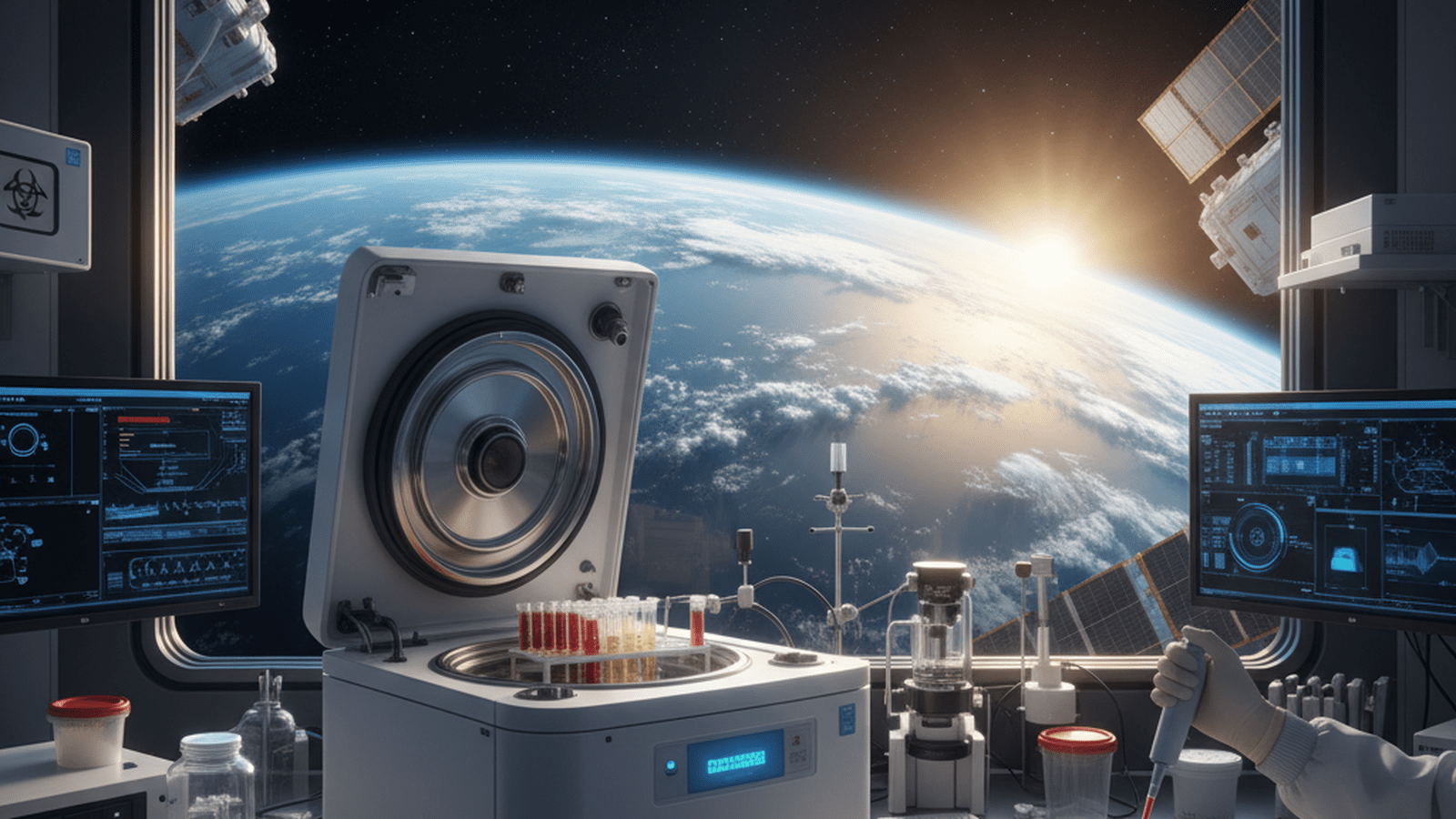
Researchers at The Ottawa Hospital have identified the biological mechanism behind space anemia, a condition where astronauts lose red blood cells at an accelerated rate. The study reveals that microgravity causes the body to destroy 54 percent more cells than it does on Earth, posing challenges for long-term missions to Mars.
TLDR: A team at The Ottawa Hospital has discovered that space travel causes the body to destroy 54% more red blood cells than normal. This process persists throughout missions, requiring new nutritional and medical strategies for future long-duration voyages to the Moon and Mars.
For more than five decades, astronauts returning from space have consistently exhibited signs of anemia, a condition characterized by a deficiency of red blood cells. While scientists initially believed this was a temporary adaptation to the fluid shifts caused by microgravity, new research from The Ottawa Hospital and the University of Ottawa suggests a more permanent and aggressive biological process. The study reveals that the human body destroys significantly more red blood cells in space than it does on Earth, a phenomenon that persists for the entire duration of a mission. This discovery changes the fundamental understanding of how the human vascular system reacts to the absence of gravity.
Led by Dr. Guy Trudel, a rehabilitation physician and researcher at The Ottawa Hospital, the team analyzed the breath and blood samples of 14 astronauts during their six-month missions on the International Space Station. By measuring the amount of carbon monoxide in the breath samples, the researchers were able to calculate the rate of red blood cell destruction. One molecule of carbon monoxide is produced for every molecule of heme that is broken down. On Earth, the human body typically creates and destroys approximately 2 million red blood cells every second. In microgravity, the study found that astronauts were destroying 3 million red blood cells per second, a 54 percent increase.
This accelerated destruction, known as hemolysis, was previously thought to be a short-term response to the initial shift of fluids to the upper body. However, the data showed that the high rate of cell loss continued unabated throughout the six-month observation period. The body appears to enter a state of chronic hemolysis that does not stabilize until the astronaut returns to a gravity-rich environment. This non-invasive technique allowed the hospital team to monitor the astronauts without the need for frequent, large-volume blood draws, which are difficult to manage in orbit.
The implications for long-term space exploration are significant. As NASA and other space agencies plan for multi-year missions to Mars, the health of the crew remains a primary concern. Anemia can lead to fatigue, decreased strength, and impaired cognitive function, all of which could jeopardize a mission’s success. Furthermore, the study found that even a year after returning to Earth, astronauts’ red blood cell destruction remained 30 percent higher than pre-flight levels. This suggests long-lasting changes to the body’s metabolic processes that require further investigation.
To compensate for the loss, the astronauts’ bodies were forced to produce more red blood cells to maintain a functional level. This requires a high-calorie, nutrient-dense diet rich in iron and protein to support the increased demand on the bone marrow. However, the researchers warn that simply increasing iron intake may not be the solution, as excessive iron can be toxic. The findings suggest that future spacecraft may need to be equipped with advanced hematology monitoring tools to track blood health in real-time during deep-space transit.
The research team is now looking into the specific mechanisms that trigger this increased destruction. They suspect that the lack of gravity affects the bone marrow’s ability to regulate cell lifespans or that the spleen becomes more aggressive in filtering out cells. Understanding these pathways is essential not only for astronauts but also for patients on Earth who suffer from anemia due to prolonged bed rest or chronic illness. By studying the extremes of space, hospital researchers are uncovering basic biological truths that could lead to new treatments for terrestrial blood disorders and improved recovery protocols for bedridden patients.

Mason Reed serves as a Staff Writer for Just Right News, where he spearheads the Future Frontiers & Special Projects desk. In an era defined by rapid technological shifts and evolving social landscapes, Mason provides a steady, principled voice, examining the innovations of tomorrow through the lens of traditional American values. His work is most prominently featured in his signature series, “The Next Horizon,” where he explores the intersection of emerging technology, national sovereignty, and the preservation of individual liberty.
A native of San Diego, California, Mason’s worldview was shaped by the unique culture of his hometown. Growing up in a region defined by its strong military presence and its history of maritime industry, he developed a deep-seated respect for the institutions that provide national stability and the entrepreneurial spirit that drives the American economy. This upbringing instilled in him a belief that true progress is not found in discarding the past, but in building upon a foundation of proven principles. His reporting often reflects this San Diego influence, emphasizing the importance of a robust national defense and the necessity of maintaining a competitive edge in the global marketplace.
Now based in San Francisco, Mason operates from the heart of the world’s technological engine. Living and working in the Bay Area provides him with a front-row seat to the advancements—and the ideological challenges—emanating from Silicon Valley. While many in the region embrace a “move fast and break things” mentality, Mason’s reporting serves as a vital counterweight. He offers Just Right News readers a “boots on the ground” perspective, documenting how radical local policies and the concentration of tech power impact the everyday lives of citizens. His proximity to the industry allows him to cut through the marketing jargon of big tech to uncover the real-world implications for privacy, free speech, and the nuclear family.
In his “Future Frontiers” beat, Mason tackles complex subjects ranging from the ethics of artificial intelligence to the burgeoning private space race. He approaches these topics with a healthy skepticism toward centralized bureaucracy, championing instead the decentralized innovations that empower individuals. Through “The Next Horizon,” he highlights the pioneers and thinkers who are working to ensure that the future remains a place where human dignity and constitutional rights are protected. He believes that the rapid pace of change requires more than just technical expertise; it requires a moral compass rooted in the Western tradition.
Throughout his tenure at Just Right News, Mason has remained committed to the idea that the future is something to be shaped, not merely accepted. His writing is characterized by a rigorous defense of American exceptionalism and a belief that the country’s best days lie ahead, provided it remains true to its founding ideals. Whether he is investigating the impact of automation on the American workforce or profiling the next generation of aerospace engineers, Mason Reed ensures that his readers are equipped with the insights they need to navigate a changing world with confidence and clarity.