

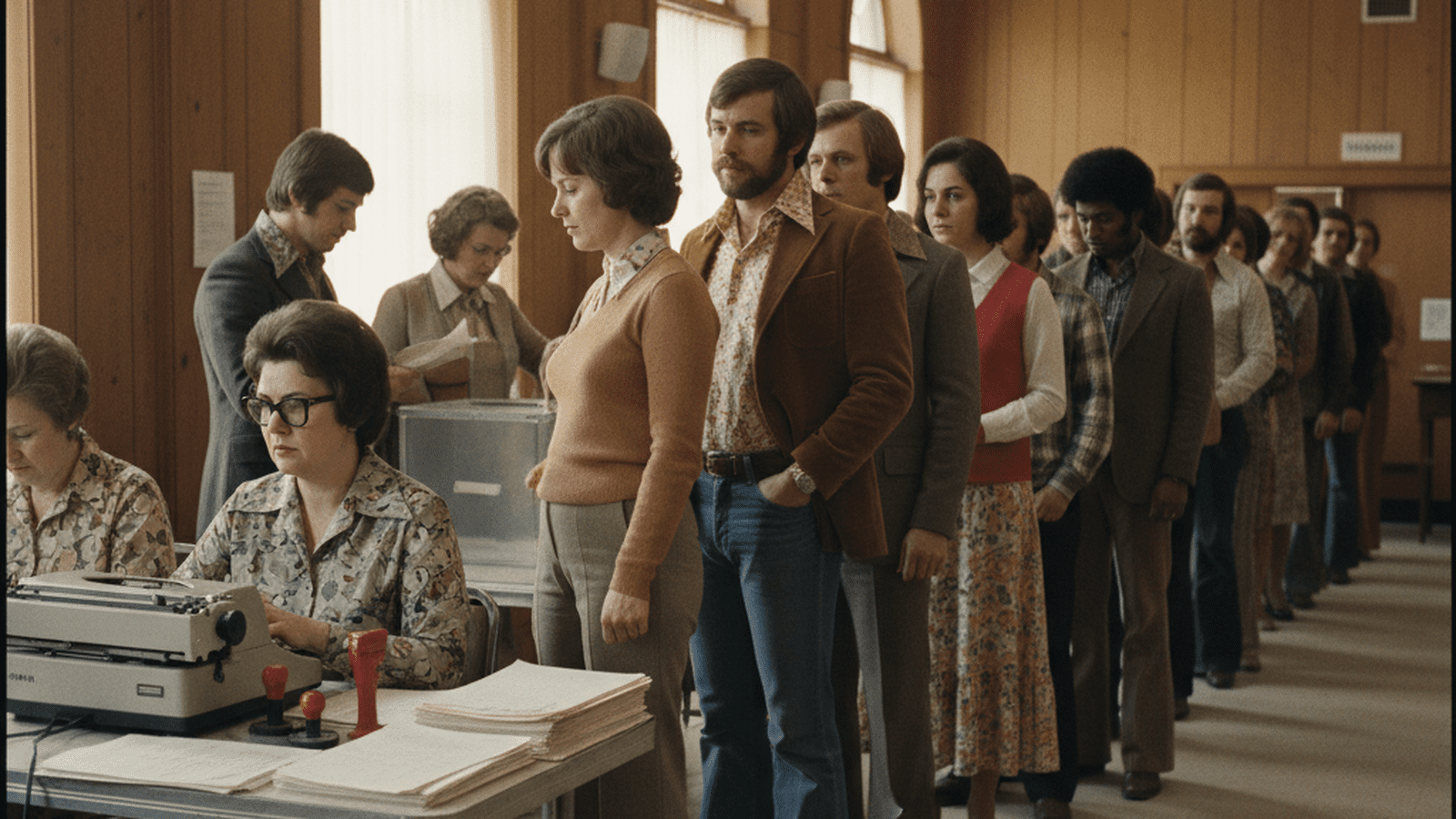
In 1974, Minnesota became one of the first states in the United States to implement same-day voter registration as part of a post-Watergate reform movement. The legislation aimed to increase civic participation by allowing citizens to register at polling places on Election Day.
TLDR: Following the Watergate scandal, Minnesota pioneered same-day voter registration in 1974 to lower barriers to democratic participation. This reform significantly boosted voter turnout and established a model for election administration that several other U.S. states eventually adopted to modernize their voting systems.
In the early 1970s, the United States faced a profound crisis of confidence. The Watergate scandal had eroded public trust in federal institutions, leading to a nationwide demand for transparency, accountability, and systemic reform. In this volatile climate, Minnesota emerged as a pioneer, leveraging its long-standing “good government” tradition to overhaul its electoral system. The centerpiece of this effort was the 1974 implementation of same-day voter registration (SDR), a move that would fundamentally alter the state’s political landscape and establish a durable national model for democratic participation.
The push for SDR was part of a broader legislative era often referred to as the “Minnesota Miracle.” Under the leadership of Governor Wendell Anderson and a reform-minded Democratic-Farmer-Labor (DFL) majority in the legislature, the state sought to remove the bureaucratic hurdles that traditionally kept citizens away from the ballot box. Before 1974, Minnesota, like most other states, required voters to register weeks in advance of an election. This deadline often passed before the heat of a campaign truly engaged the general public, effectively disenfranchising those who became interested in the final days of an election cycle.
The 1973 legislation, which took effect for the 1974 midterms, allowed any eligible citizen to register at their polling place on Election Day. To ensure security and prevent potential abuse, the law required voters to provide proof of residence, such as a driver’s license or a utility bill. In a unique nod to community trust and rural traditions, the law also allowed for “vouching,” where a registered voter in the same precinct could swear an oath to verify the residency of a neighbor who lacked documentation. Critics at the time expressed significant fears that such a system would be ripe for fraud, arguing that it would be impossible to verify registrations in real-time. However, proponents argued that the risk was minimal compared to the massive benefit of increased civic engagement.
The first major test of the system occurred during the November 1974 elections. Local election officials and precinct judges faced the daunting task of processing thousands of new registrations while managing the usual flow of voters. Despite the logistical pressure and the novelty of the process, the rollout was remarkably smooth. The results were immediate and measurable: Minnesota saw a significant surge in voter turnout, particularly among young people, students, and low-income residents who tended to move more frequently. This demographic shift helped solidify Minnesota’s reputation as a high-participation state, a title it has consistently held for nearly half a century.
The success of the Minnesota model quickly resonated beyond its borders. By 1975, Maine and Wisconsin had followed suit, adopting their own versions of same-day registration. These states formed a “triad” of high-turnout jurisdictions that proved accessible registration did not come at the cost of election integrity. The Minnesota experience provided the empirical evidence needed for later federal reforms, including the National Voter Registration Act of 1993, also known as the “Motor Voter” law, which sought to standardize registration opportunities across the country.
Decades later, the 1974 reform remains a cornerstone of Minnesota’s political identity. While other states have moved toward more restrictive voting laws in recent years, Minnesota has largely protected and expanded its SDR system. The policy has survived numerous legal challenges and legislative attempts at repeal, consistently defended by a bipartisan consensus that high turnout is a sign of a healthy and functioning republic. Today, as the United States continues to debate the balance between security and access, the 1974 Minnesota model stands as a testament to the idea that lowering barriers to the ballot box is essential for a vibrant, representative democracy.

Sophie Carter serves as a Staff Writer for Just Right News, where she anchors the outlet’s critical coverage of Elections, Influence, and Democracy Infrastructure. In an era where the mechanics of voting and the flow of political capital are under constant scrutiny, Sophie provides a steady, principled voice dedicated to the preservation of American institutional integrity and the rule of law.
Raised in Charlotte, North Carolina, Sophie’s perspective was forged in a community that balances rapid modern growth with a deep respect for tradition and civic duty. Growing up in the Queen City, she witnessed firsthand how a robust local culture depends on the trust between the citizen and the state. This upbringing instilled in her a foundational belief that the right to vote is a sacred trust—one that must be protected from both administrative overreach and the encroaching influence of special interest groups. Her reporting reflects these North Carolina roots, emphasizing the importance of community-led governance and the preservation of the individual’s voice in the face of nationalized political movements.
Now based in Atlanta, Georgia, Sophie operates from the heart of one of the nation’s most pivotal and contested political landscapes. Her location allows her to report from the front lines of the debate over election security, legislative reform, and the modernization of voting systems. For Sophie, the “infrastructure” of democracy is not merely a matter of machines and ballots; it is the collection of laws, people, and transparent processes required to maintain public confidence. Her work often highlights the necessity of clear, enforceable standards that ensure every legal vote is counted fairly and that the machinery of our republic remains accountable to the taxpayers who fund it.
Central to her work at Just Right News is her acclaimed feature series, “The Price of a Vote.” Through this ongoing project, Sophie explores the complex web of influence that shapes modern campaigns and policy decisions. She delves into how high-level lobbying, non-governmental organizations, and shifting bureaucratic regulations impact the weight of an individual citizen’s ballot. By examining the financial and structural pressures placed on the electoral process, she provides readers with a comprehensive look at the forces vying for control over the American political system.
Sophie’s approach to journalism is rooted in a commitment to the constitutional framework. She views her role as a watchdog for the voter, ensuring that the systems meant to serve the public remain transparent and free from corruption. Whether she is analyzing the implementation of new voting technologies or investigating the influence of outside money on state-level policy, her work is characterized by a rigorous adherence to facts and a refusal to succumb to the sensationalism that often plagues modern political reporting.
At Just Right News, Sophie Carter continues to be a vital resource for readers who value clarity, conviction, and a defense of traditional American values. Her deep ties to the Southeast and her specialized focus on the mechanics of our republic make her an essential voice in the ongoing conversation about the future of American self-governance. Through her reporting, she remains dedicated to the idea that a secure and honest electoral system is the bedrock of a free and prosperous society.